
Ideas for the curious solver
The ZUDOKU Journal
Understand the logic. Explore the stories. Enjoy the next puzzle.
Browse all 29 articles ↓The ZUDOKU Journal
Featured stories
Discover the stories, mathematics, and elegant logic behind the grid. Read, look closer, and try it for yourself.
 Read & explore
The mathematics · 6 min
Why Sudoku needs 17 clues
Why 17 is the minimum for a unique classic Sudoku solution, how researchers ruled out 16, and why fewer clues do not automatically make a puzzle harder.
Open the story Read & explore
History & culture · 6 min
How Sudoku travelled the world
From Number Place in an American magazine to Nikoli, Wayne Gould and a world championship: the documented journey behind the familiar grid.
Open the story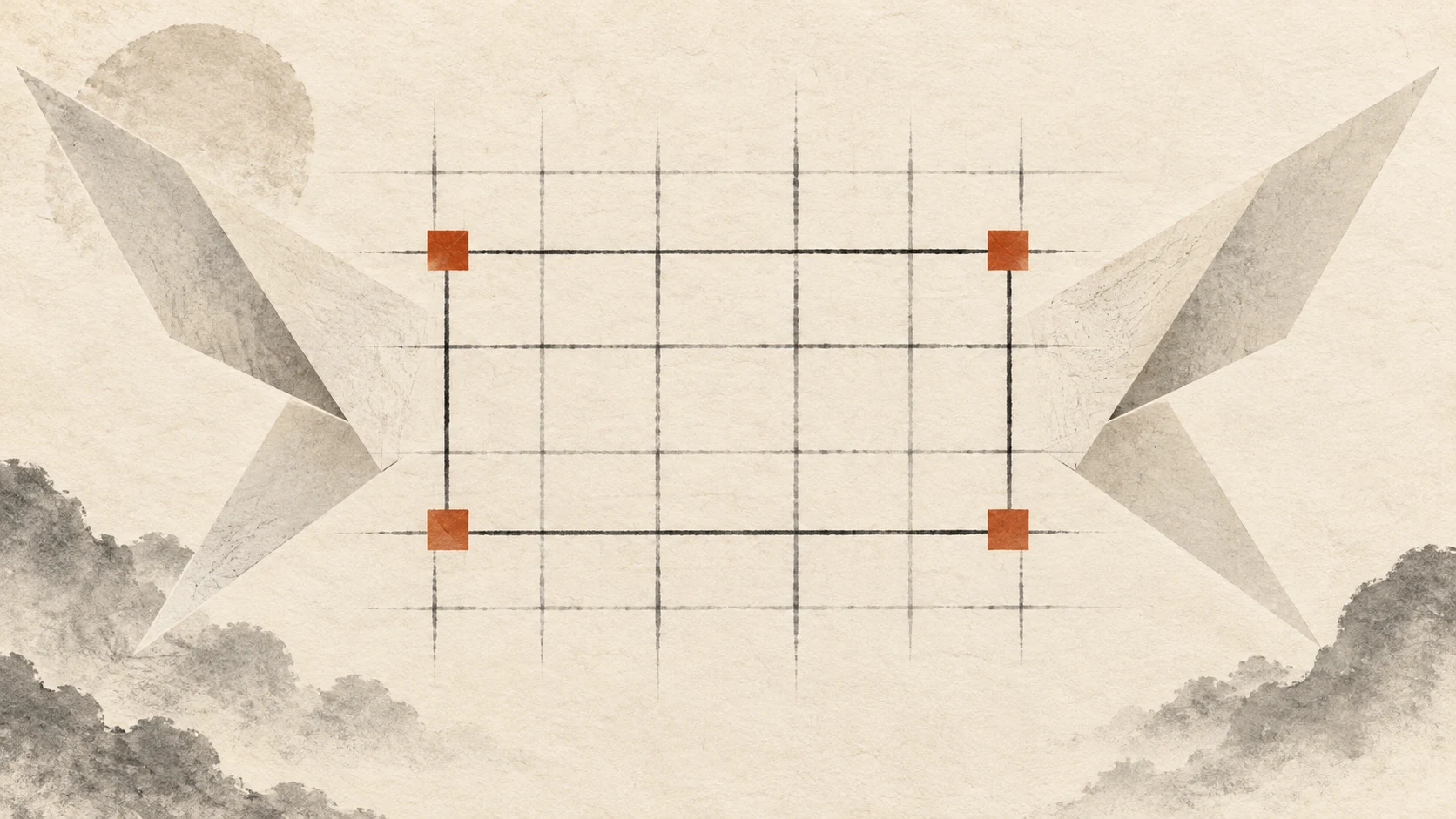 Read & explore
Visual solving · 5 min
The X-Wing: four corners, one clear deduction
Learn to recognise a Sudoku X-Wing, see why its two possible arrangements force eliminations, and test the idea in an interactive candidate map.
Open the storyEvery new exploration includes original visuals, cited sources, and something to try.
Learn at your own pace
The complete reading room
29 guides and explorations. Each includes sources, three illustrations, and an exercise to try.
29 articles
Read & exploreThe mathematics · 6 min
Why Sudoku needs 17 clues
Why 17 is the minimum for a unique classic Sudoku solution, how researchers ruled out 16, and why fewer clues do not automatically make a puzzle harder.
Open the storyRead & exploreHistory & culture · 6 min
How Sudoku travelled the world
From Number Place in an American magazine to Nikoli, Wayne Gould and a world championship: the documented journey behind the familiar grid.
Open the storyRead & exploreVisual solving · 5 min
The X-Wing: four corners, one clear deduction
Learn to recognise a Sudoku X-Wing, see why its two possible arrangements force eliminations, and test the idea in an interactive candidate map.
Open the story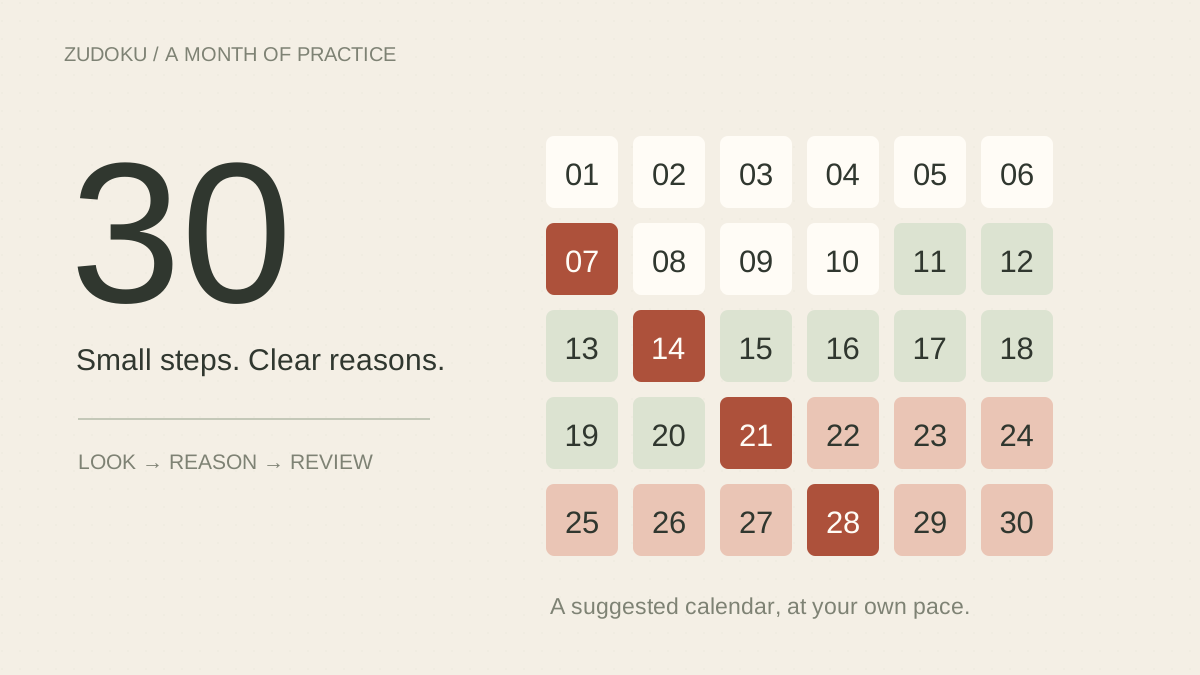 Read & explore
Practice & progress · 4 min
A 30-Day Sudoku Training Plan You Can Adapt
Thirty specific Sudoku practice prompts, a useful review log, and a flexible way to choose your next exercise without promising a fixed improvement rate.
Open the story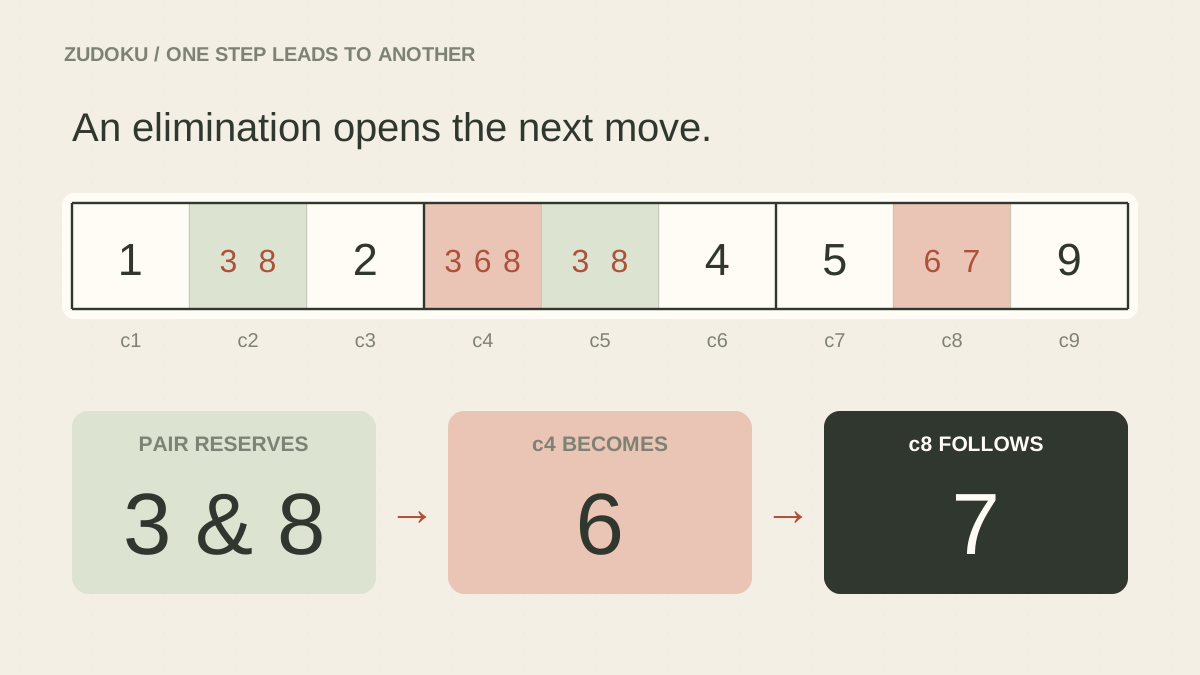 Read & explore
Solving techniques · 5 min
A Sudoku Strategy Roadmap: Choose the Next Useful Question
Build a practical solving loop from singles, reliable candidates and eliminations, with clear stopping points and no promises about universal difficulty levels.
Open the story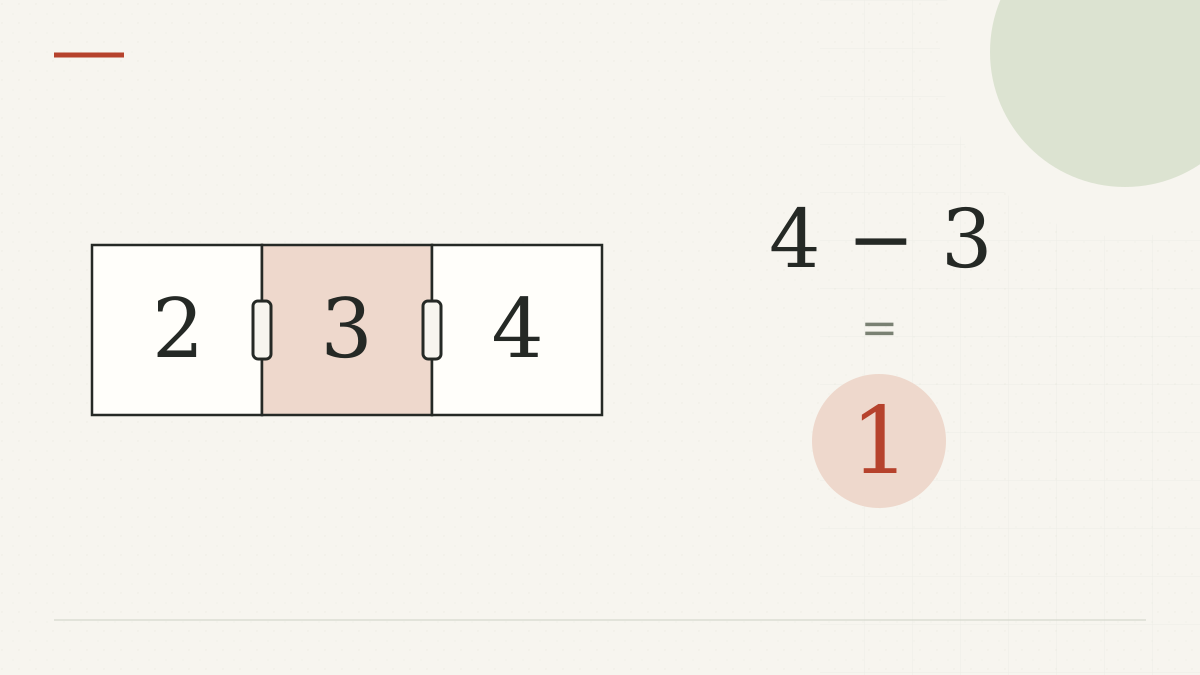 Read & explore
Sudoku variants · 4 min
Consecutive Sudoku: follow the mark, question the gap
Filter neighbouring pairs with difference one, use shared candidates, and avoid the common mistake of inventing a rule for missing marks.
Open the story Read & explore
Playing ZUDOKU · 4 min
Daily Dojo: One Challenge, One Useful Review
Understand the difference between Daily Dojo and web practice, prepare for the daily challenge, and review time, mistakes and hints without chasing a streak at any cost.
Open the story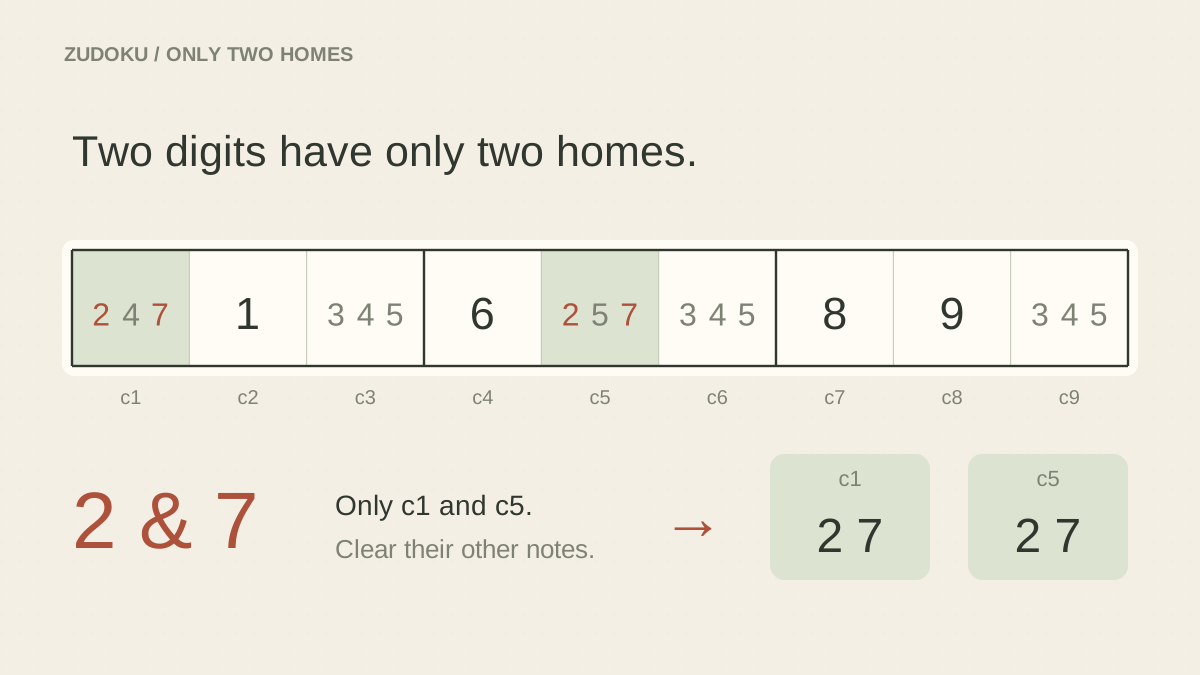 Read & explore
Solving techniques · 4 min
Hidden Pairs and Triples: Find Digits with Nowhere Else to Go
Read a house by digit, locate a hidden pair or triple, and remove the extra candidates inside its reserved cells.
Open the story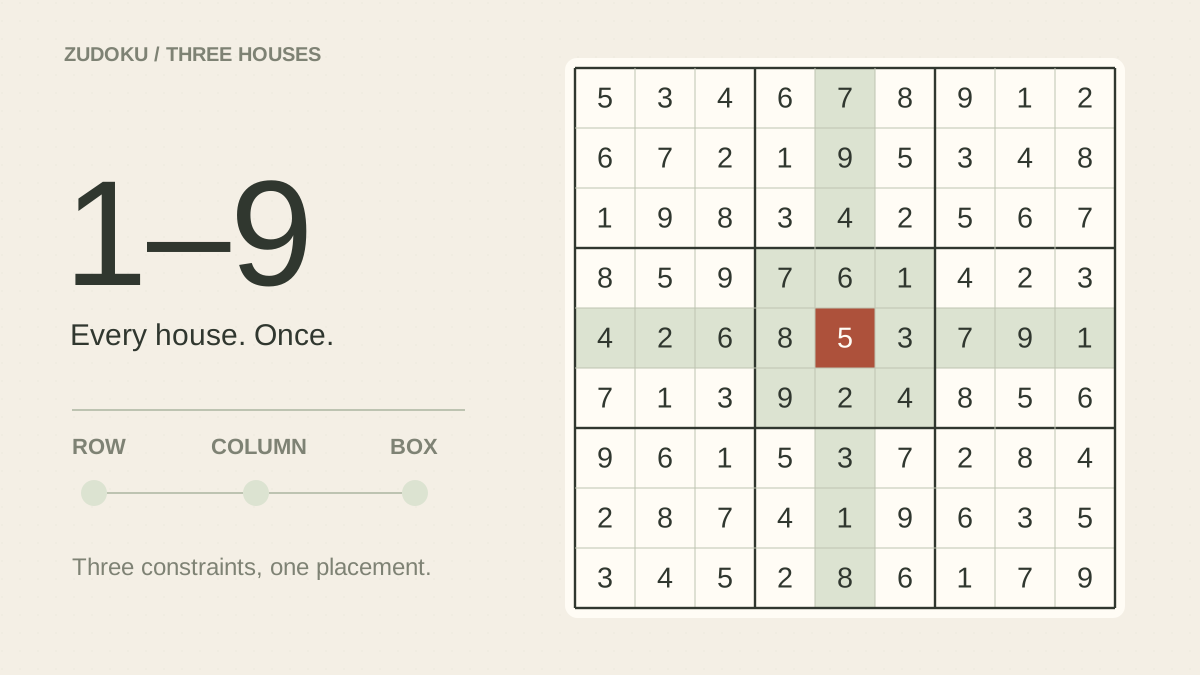 Read & explore
Getting started · 5 min
How to Play Sudoku: Three Rules and Your First Proved Move
Read a classic Sudoku grid, distinguish a possible number from a forced one, and work through your first placement.
Open the story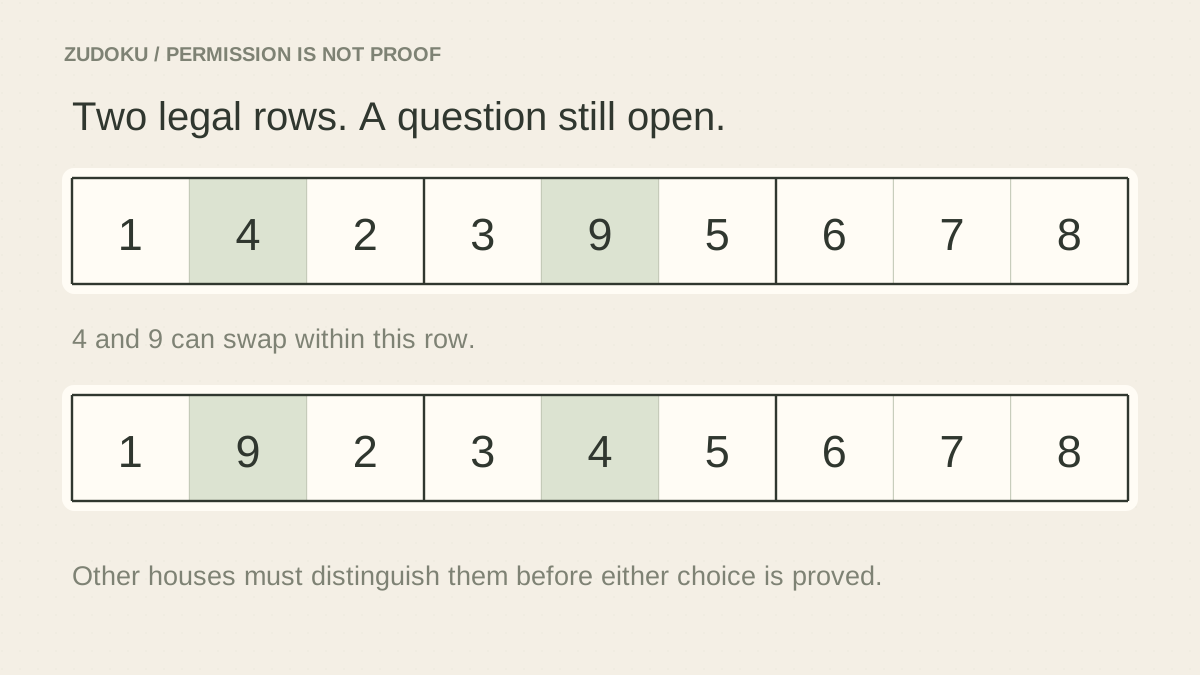 Read & explore
Solving techniques · 5 min
How to Solve Sudoku Without Guessing: Make Every Move Explainable
Distinguish a legal candidate from a proved answer, use a concrete recovery routine, and understand how a contradiction can justify an elimination.
Open the story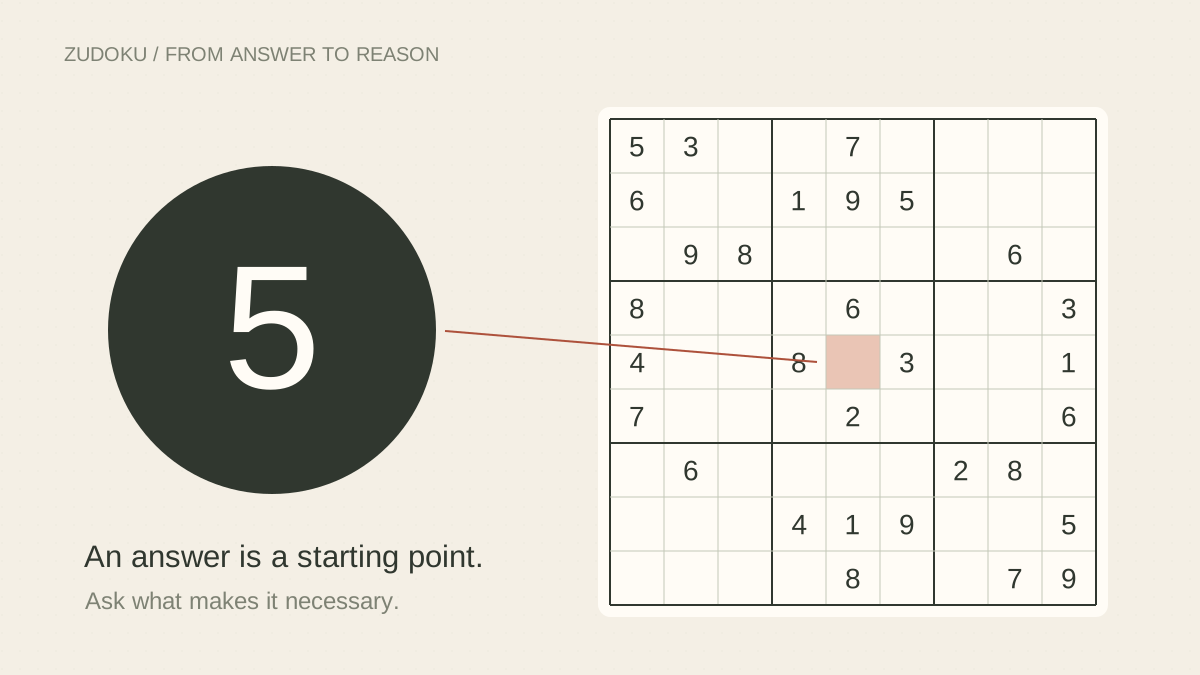 Read & explore
Practice & progress · 4 min
How to Use Sudoku Hints Without Skipping the Explanation
Distinguish an answer reveal from a teaching hint, understand ZUDOKU’s web hint behaviour, and reconstruct one small deduction with a worked candidate example.
Open the story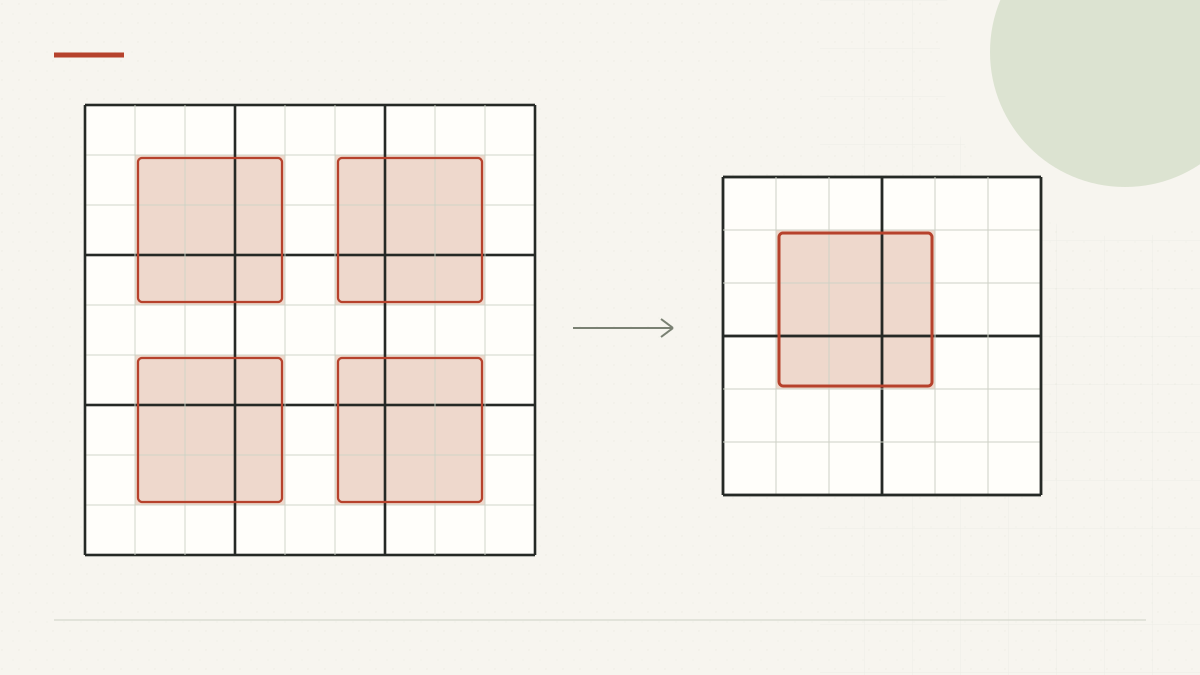 Read & explore
Sudoku variants · 5 min
Hyper Sudoku strategy: use the four windows precisely
Locate the extra regions, combine their candidates with ordinary boxes, and prove a window-to-row elimination without inventing constraints.
Open the story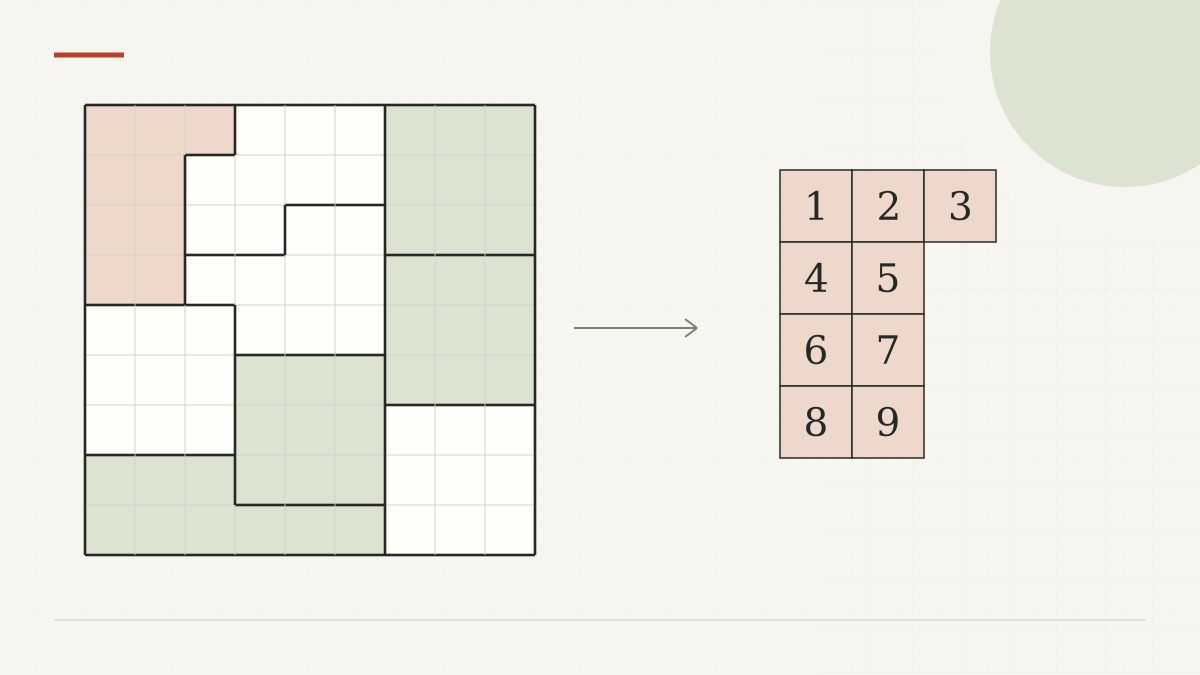 Read & explore
Sudoku variants · 4 min
Jigsaw Sudoku strategy: read the region that is really there
Replace square-box habits with border tracing, region singles and a precise locked-candidate example for irregular Sudoku.
Open the story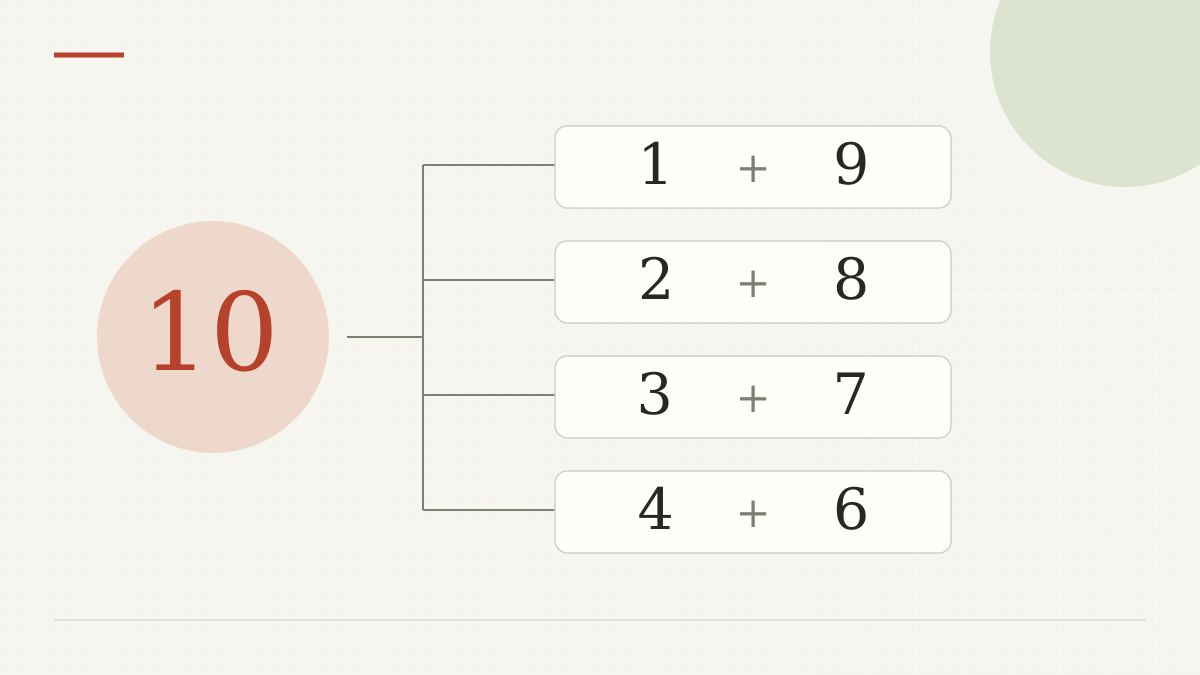 Read & explore
Sudoku variants · 5 min
Killer Sudoku combinations: from a sum to a legal placement
Build complete cage lists, filter them against cell candidates, and understand what a surviving combination actually proves.
Open the story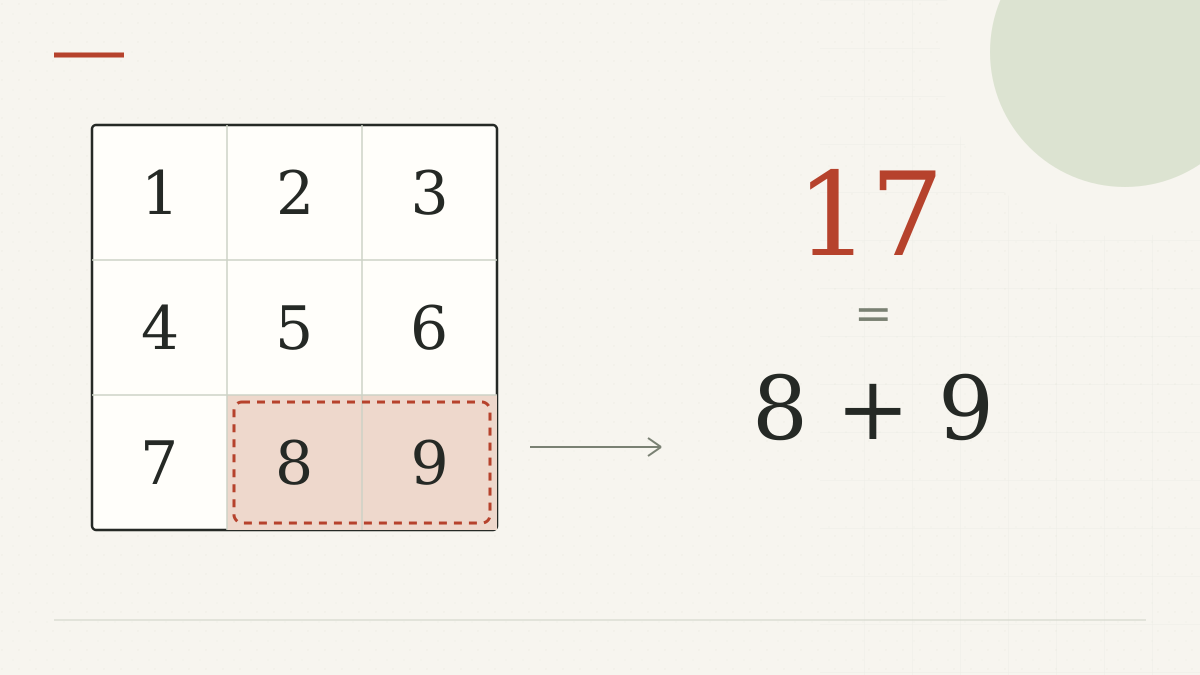 Read & explore
Sudoku variants · 5 min
Killer Sudoku rules: make every sum earn its place
Learn cages, distinct digits and the 45 rule with precise examples—and see why a correct sum is only half a placement proof.
Open the story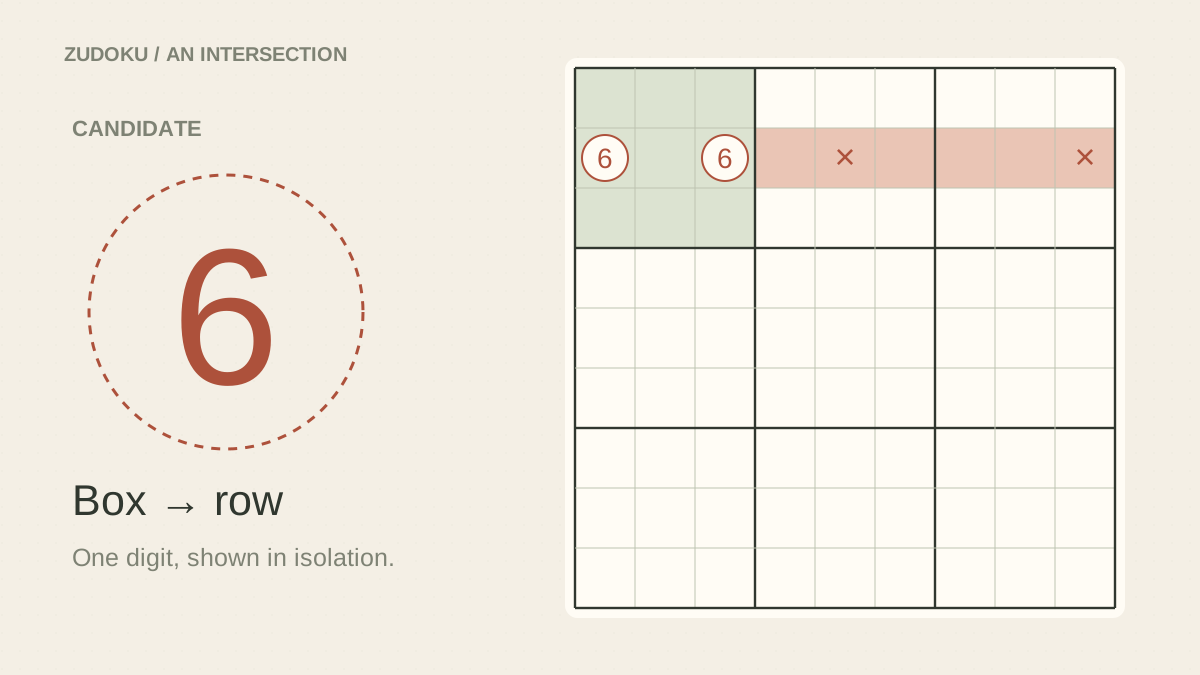 Read & explore
Solving techniques · 4 min
Locked Candidates: Pointing and Claiming with Clear Boundaries
Follow a digit from a box into a line, or from a line into a box, and see exactly where each restriction removes candidates.
Open the story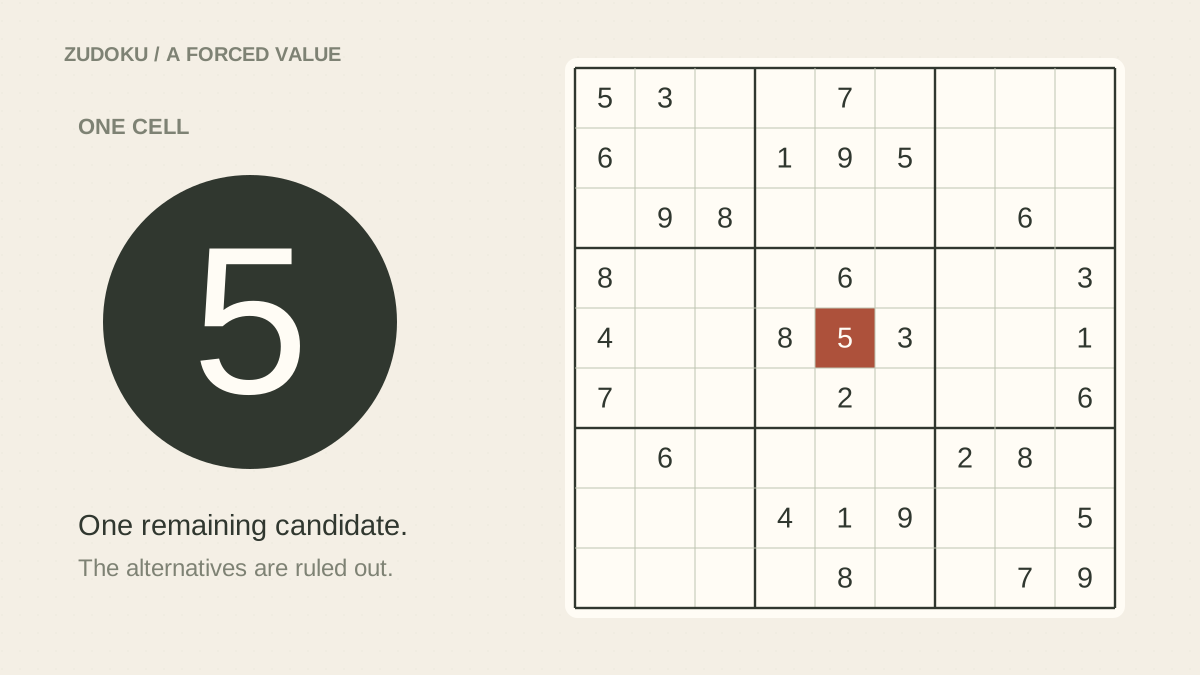 Read & explore
Solving techniques · 4 min
Naked and Hidden Singles: Two Ways to Prove One Digit
Learn the difference between a cell with one candidate and a digit with one location, using two checked examples.
Open the story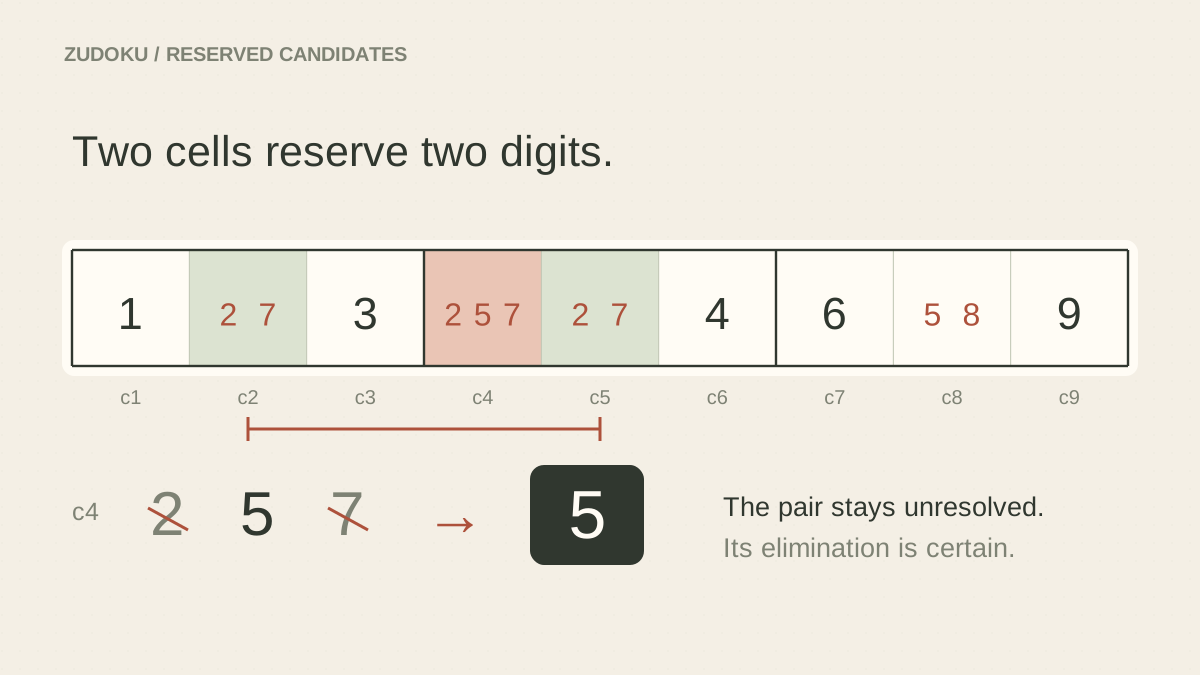 Read & explore
Solving techniques · 4 min
Naked Pairs and Triples: Reserve Digits Before Placing Them
See why two or three cells can reserve a set of digits, which candidates disappear, and why triple lists need not be identical.
Open the story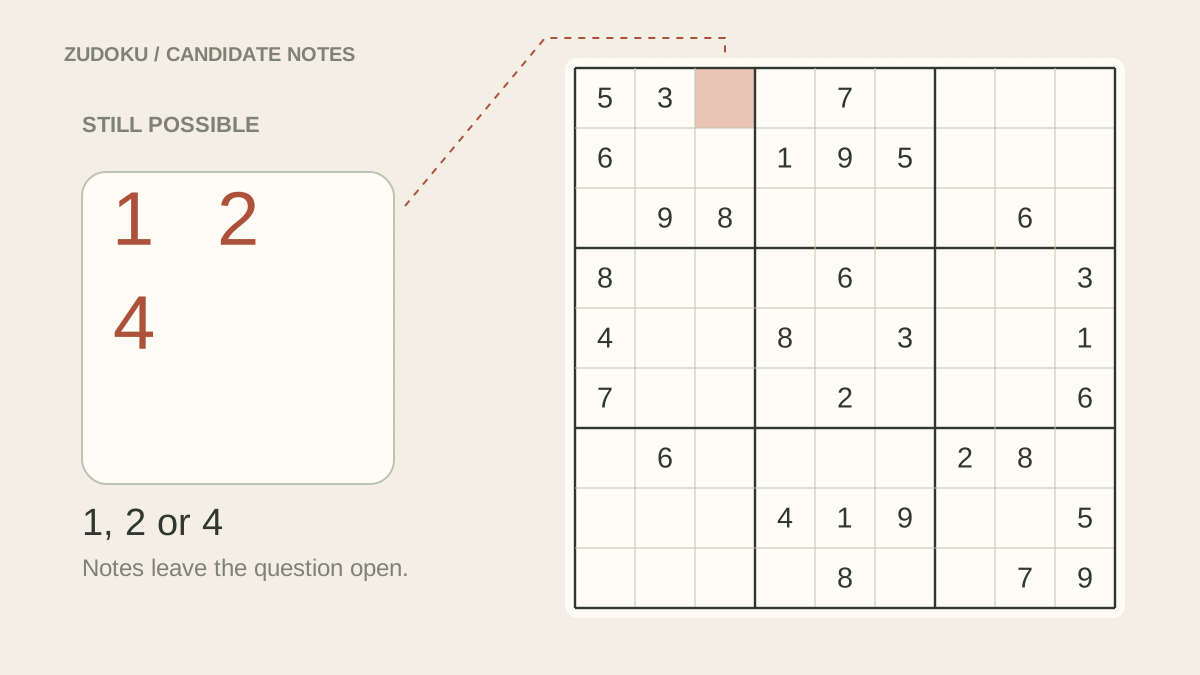 Read & explore
Getting started · 5 min
Pencil Marks in Sudoku: What a Note Does—and Does Not—Prove
Build accurate candidate lists, distinguish partial notes from complete ones, and follow a worked cleanup that creates a single.
Open the story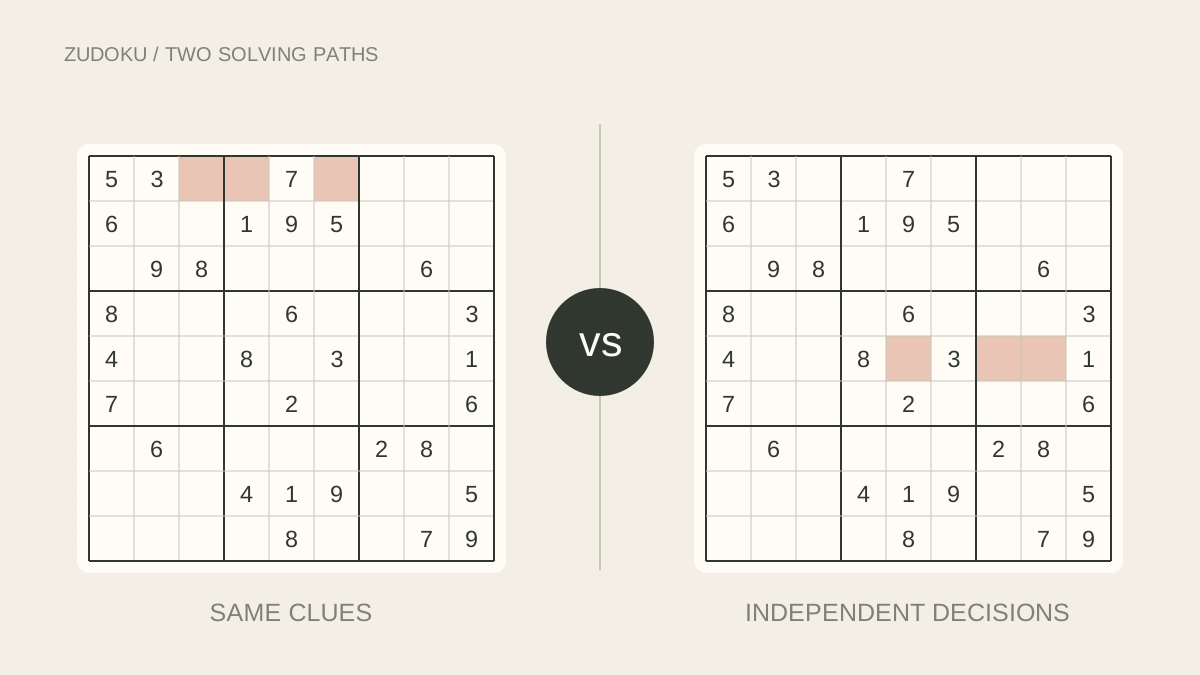 Read & explore
Playing ZUDOKU · 4 min
Ranked PvP Sudoku: Prepare for the Match You Actually Enter
Separate ranked, friendly and solo practice, check app availability, and use a concrete proof-first decision routine when competitive Sudoku adds time pressure.
Open the story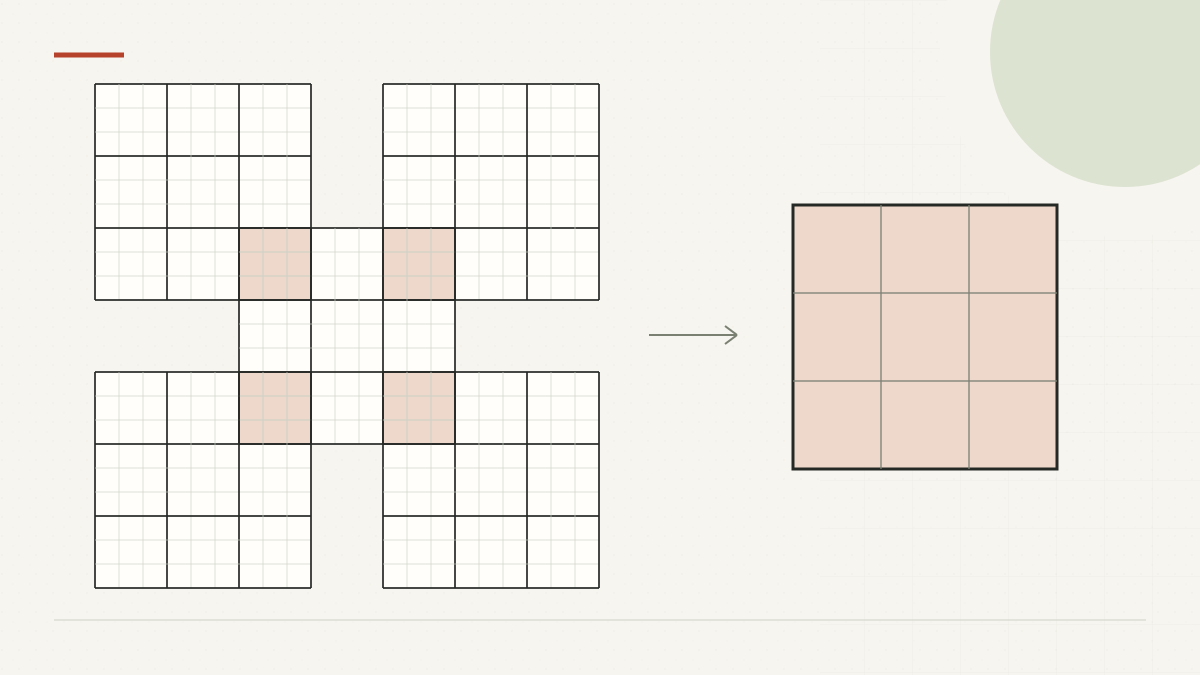 Read & explore
Sudoku variants · 4 min
Samurai Sudoku strategy: make the overlaps carry information
Map five grids, keep shared cells consistent, and combine both sets of house constraints without treating the whole canvas as one giant Sudoku.
Open the story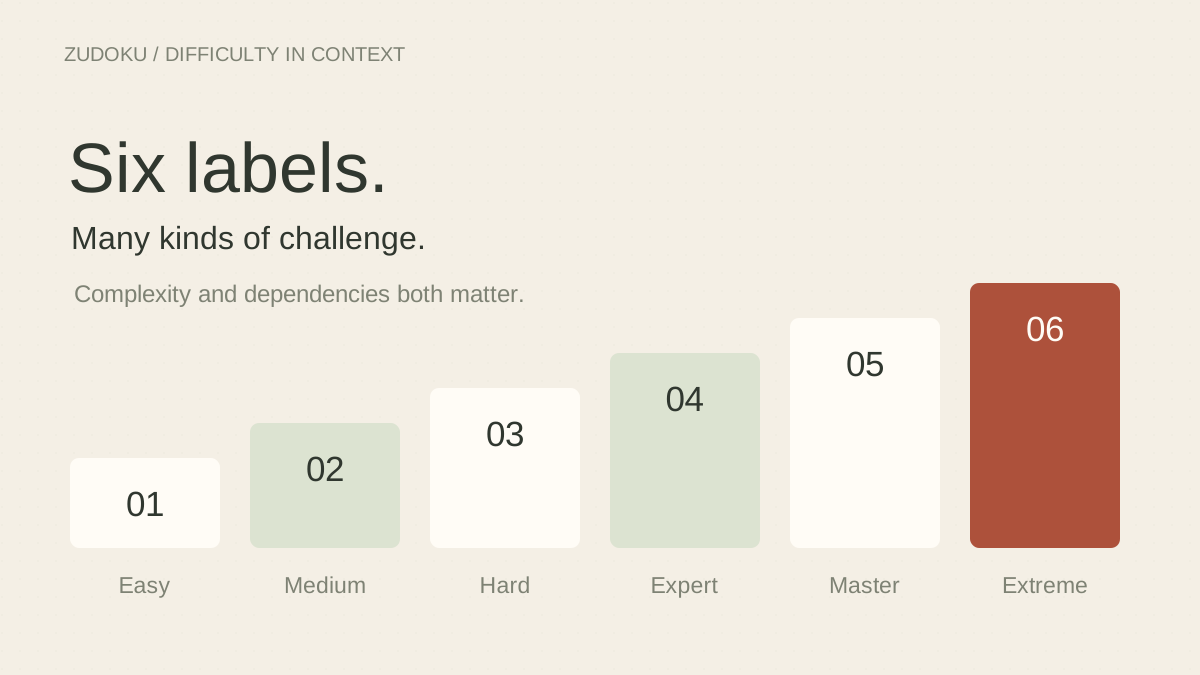 Read & explore
Practice & progress · 4 min
Sudoku Difficulty Levels: What the Labels Can Tell You
Understand ZUDOKU’s six difficulty labels, why clue counts are incomplete, and how technique demands, dependencies and assistance affect a useful comparison.
Open the story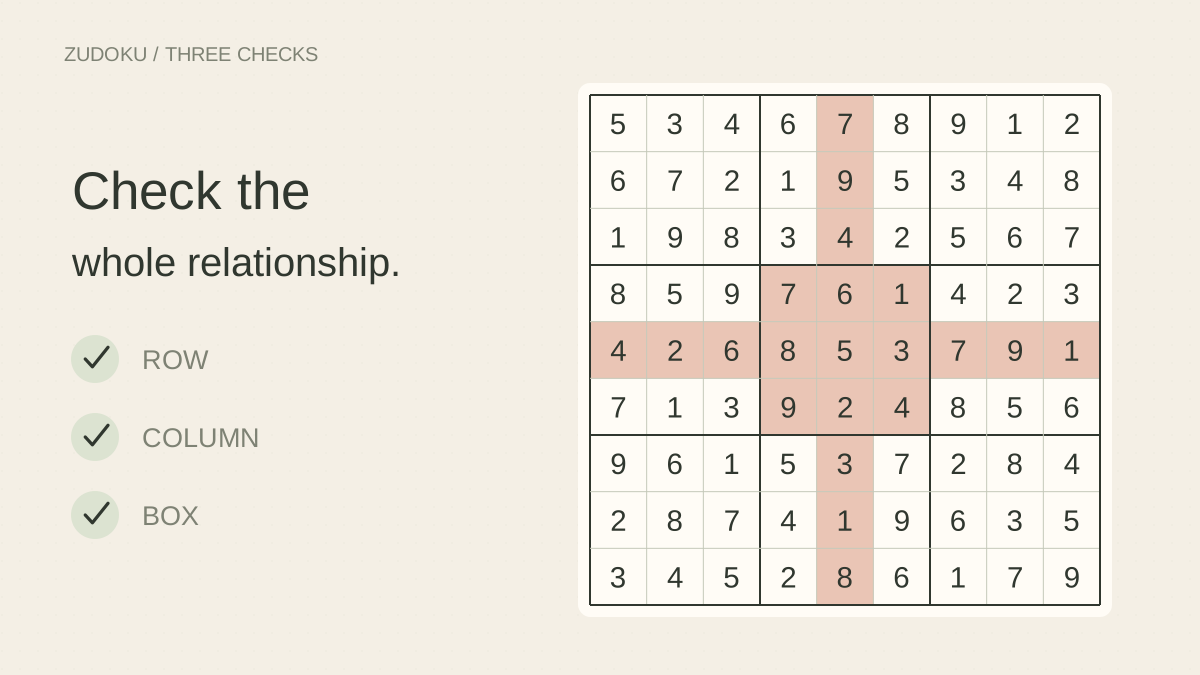 Read & explore
Practice & progress · 4 min
Sudoku Mistake Prevention: Check the Reason, Then the Entry
Distinguish legal candidates from proved values, work through a naked-pair example, and repair input, note and reasoning errors without compounding them.
Open the story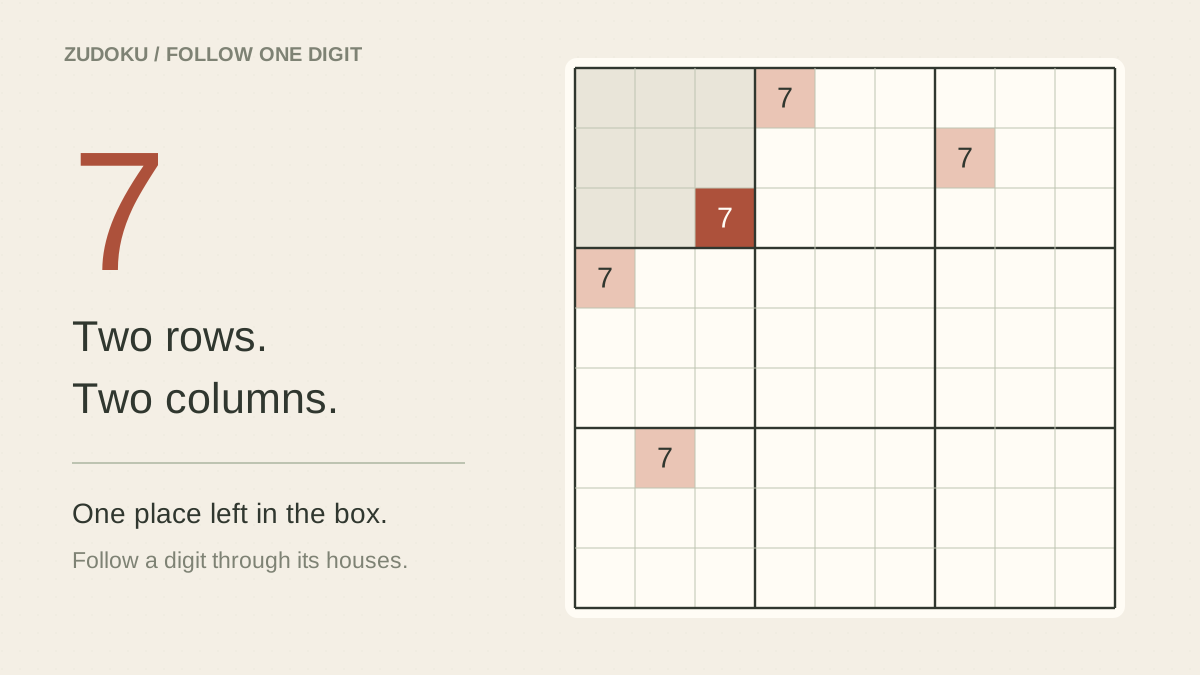 Read & explore
Solving techniques · 4 min
Sudoku Scanning: Follow One Digit to a Forced Cell
Use rows, columns and boxes to narrow a digit's locations, and learn when a scan gives a placement or only a restriction.
Open the story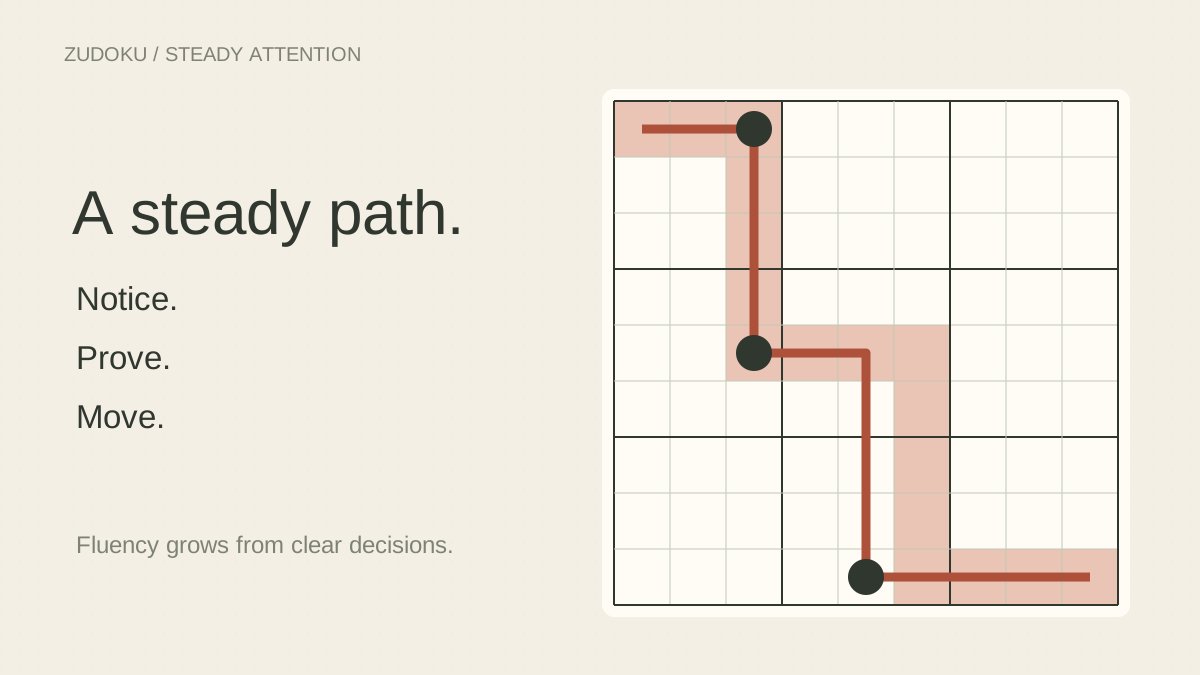 Read & explore
Practice & progress · 4 min
Sudoku Speed Solving: Find Where the Time Goes
Use clearly labelled timing examples, consistent conditions and a focused review to explore faster Sudoku solving without replacing deductions with guesses.
Open the story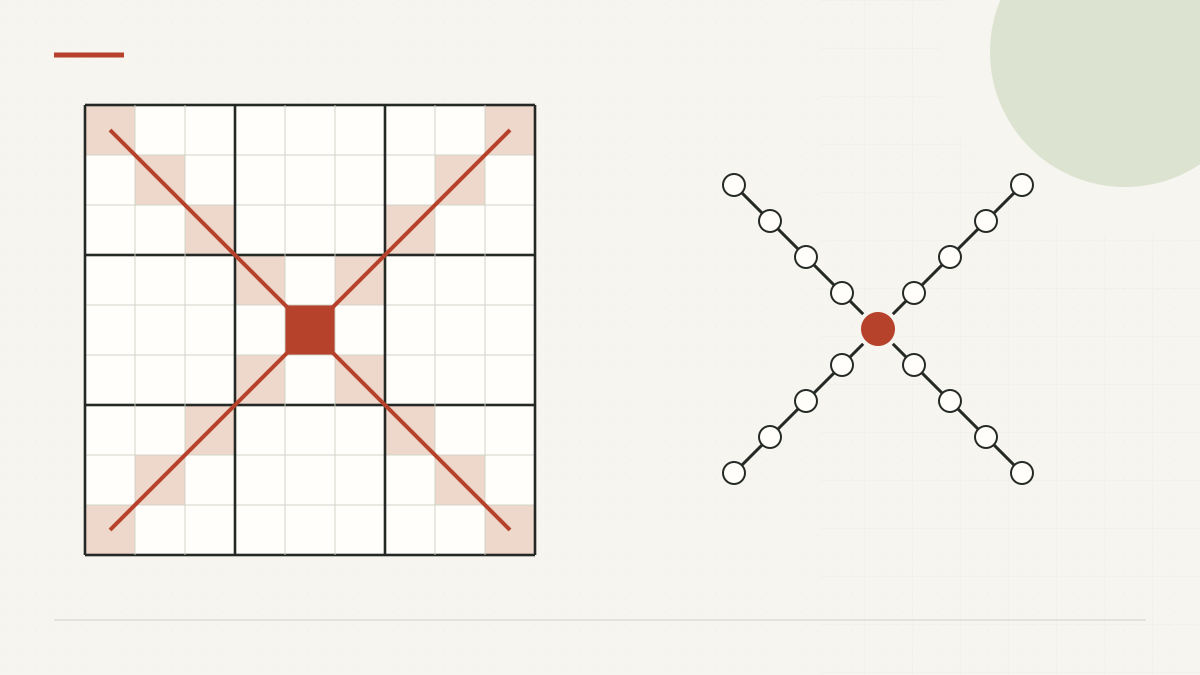 Read & explore
Sudoku variants · 4 min
Sudoku X strategy: let the diagonals do real work
Use the two extra houses, check the shared centre correctly, and turn diagonal restrictions into ordinary box eliminations.
Open the story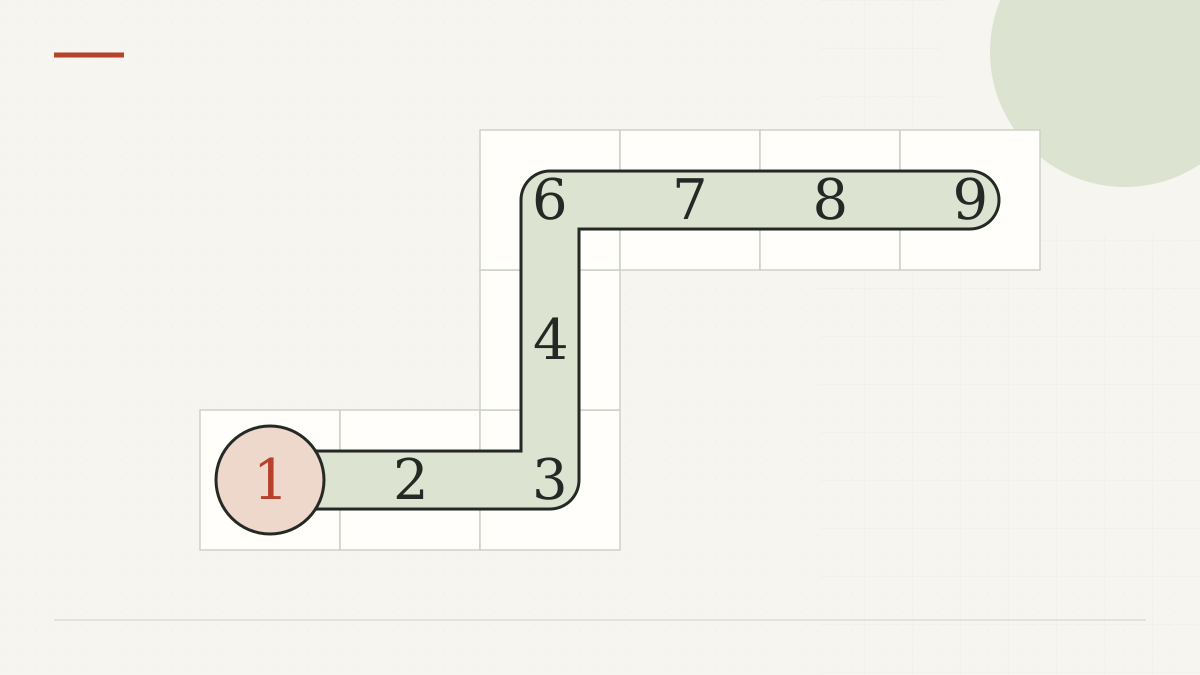 Read & explore
Sudoku variants · 4 min
Thermo Sudoku: prove the range before placing the digit
Read strict bulb-to-tip increase, derive positional limits, and tighten a thermometer using fixed values and real cell candidates.
Open the story Read & explore
Playing ZUDOKU · 4 min
ZUDOKU Awards: Read the Requirement Before the Chase
Explore the verified 500-entry award catalog, rarity counts, concrete starter requirements, sign-in and practice-only limits, and what ZOKU represents.
Open the story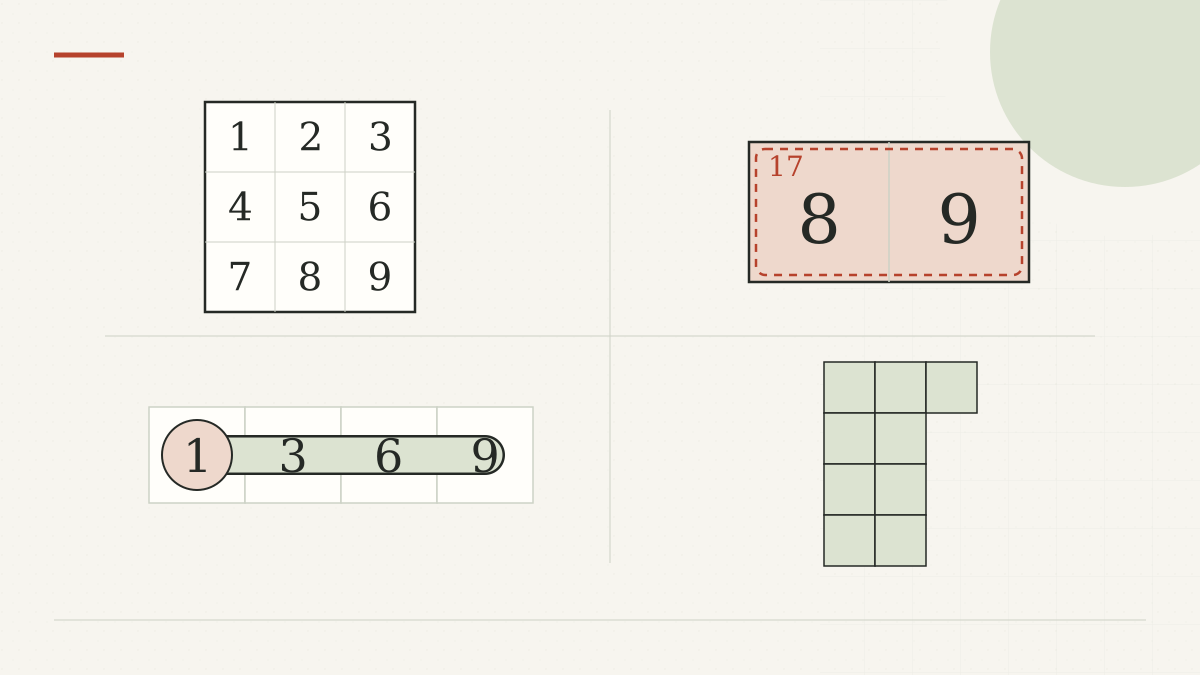 Read & explore
Playing ZUDOKU · 5 min
ZUDOKU modes compared: choose a different kind of deduction
Compare eight Sudoku rule sets by what they actually change, with clear distinctions between playable classic modes and current Plus previews.
Open the storyNo articles match. Try a shorter search or choose all topics.